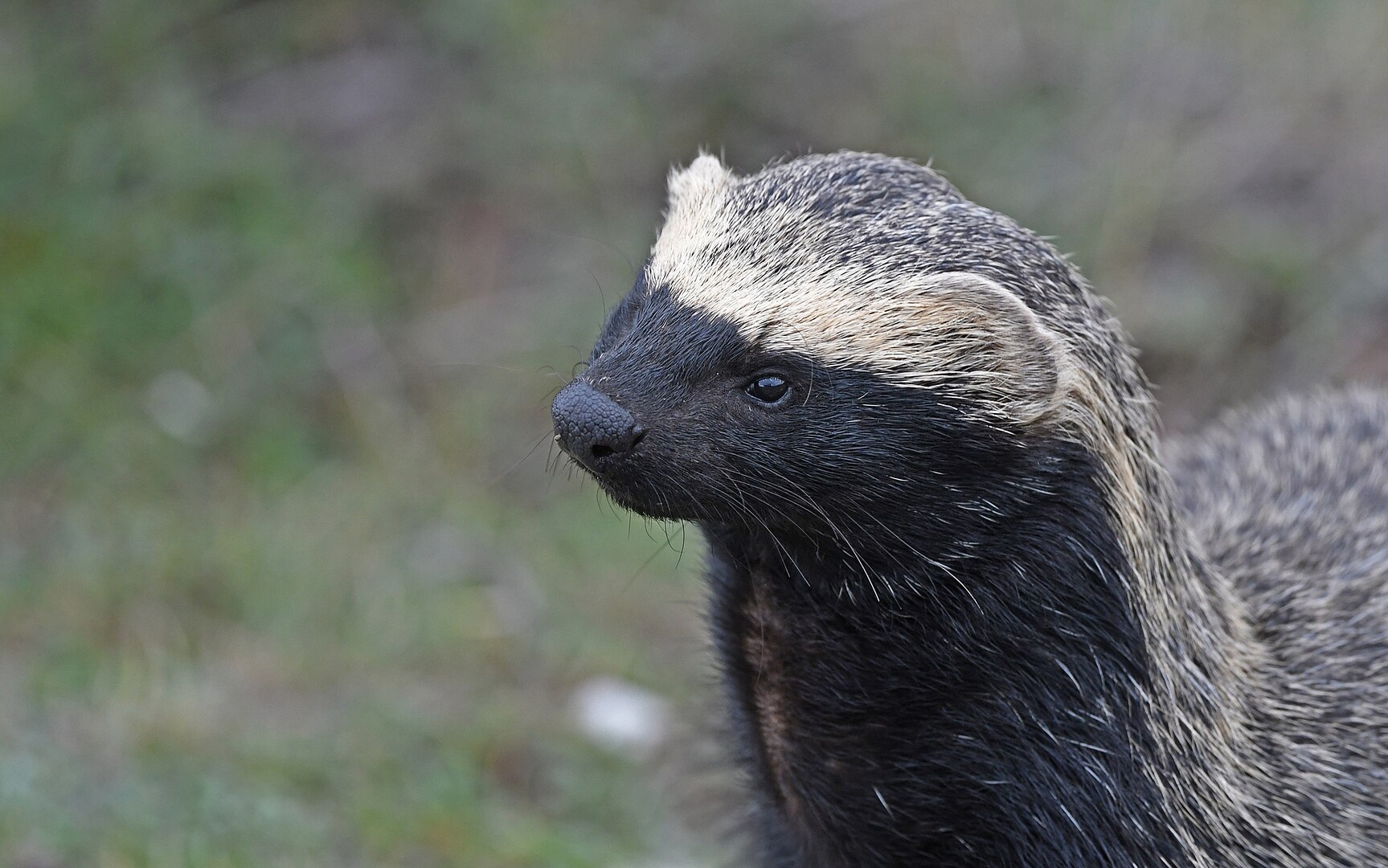
Captured for the first time this year by one of our trap cameras at the Eco Lodge Itororó, Lesser grisons (Galictis cuja) are a native South American species of mustelid found at elevations ranging from sea level to 4,200 meters. Adults can weigh between 1.2 and 2.4 kg.
Lesser grisons feed on small to medium rodents, as well as rabbits, birds, frogs, lizards, snakes, and their eggs, in addition to fruits. In turn, they are prey to larger animals such as the Maned Wolf, ocelots, jaguarundis, and other smaller cats.
Lesser grisons are monogamous and hunt together when raising their litter of two to five young. They can either live solitary lives or in small family groups and travel together in a single file.
Lesser grisons are primarily active during the day, and at night, will sleep in hollow trees, natural crevices, or excavated burrows, which can be as deep as four meters and have entrances hidden by leaves. Despite being classified as Least Concern by the IUCN due to their wide distribution, Lesser grisons are still rare in their range and can be difficult to spot.
Watch the Lesser grison captured for the first time this year by one of our trap cameras, in slow motion: